
A recent Associated Press report highlighted a reality many American families face: most people requiring extended care eventually deplete their life savings to qualify for Medicaid. Upon looking at public discussion surrounding that topic, a deep issue emerged. There's a widespread misunderstanding of what long-term care actually looks like.
In my decades of helping families navigate long-term care insurance (LTCI) as a certified specialist, two pervasive myths consistently surface in public commentary. Both leave families financially vulnerable and emotionally unprepared. That's why it is important to understand how long-term care works and how you can protect yourself and your family.
Key Takeaways
- Not Hospice or End-of-Life Care: Long-term care supports daily living activities like dressing, bathing, and mobility across years of active life, whereas terminal care focuses strictly on the final months.
- Global Systems Require Contribution: Other developed nations do not offer free care without strings. Countries like Germany require mandatory insurance, while the UK and Canada enforce strict personal asset spend-downs.
- "Opting Out" Is Not a Plan: Medical aid-in-dying laws require a terminal prognosis of six months or fewer, meaning they legally cannot apply to chronic mobility issues, stroke recovery, or cognitive decline.
- Funding the "Middle" Years: Care needs can span three or more years, and insurance coverage preserves the ability to live in assisted living, attend family milestones, and maintain autonomy.
- Preserving Dignity & Relieving Family: Planning ahead prevents families from becoming physically and emotionally overwhelmed, while protecting personal savings from rapid Medicaid spend-downs.
Myth 1: "Other Developed Nations Provide Free Long-Term Care"
A frequent reaction is: "Every other developed nation covers this. Why doesn’t the U.S.?"
It sounds intuitive, but global healthcare data paints a different picture:
- Germany & Japan: Neither provides free care. Both enforce mandatory, payroll-funded social long-term care insurance programs that still require meaningful out-of-pocket contributions.
- The UK, France, & Canada: These nations require strict means-testing. Citizens must spend down significant personal assets and income before state support begins.
- The U.S. Reality: In many respects, qualifying for long-term care funded by Medicaid in the United States involves asset limits comparable to, or even less restrictive than, the means-testing required by the UK’s National Health Service (NHS) social care system.
Universal healthcare across the globe rarely covers comprehensive, non-medical custodial care without substantial personal financial involvement.
Myth 2: "I’ll Just Opt Out When the Time Comes"
The second misconception is more dangerous: commenters stating they will simply "opt out" or rely on medical aid-in-dying ("death with dignity") laws so they don't burden their children or exhaust their savings. That is not how chronic care works.
Medical aid-in-dying statutes require that an individual be mentally competent and have a terminal prognosis of six months or less.
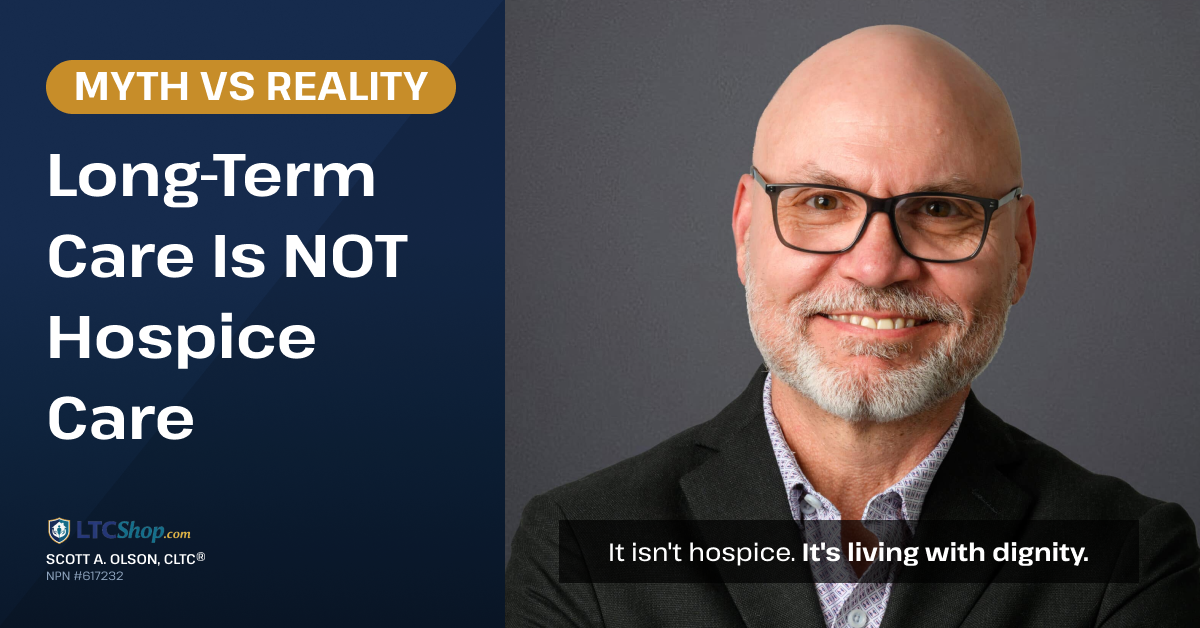
Long-term care is custodial care, not hospice or palliative end-of-life care. It addresses chronic illness, mobility limitations, cognitive decline (such as Alzheimer's or dementia), and the natural frailties of aging. These conditions do not end a life in six months, they often persist for three, five, or ten years.
The Reality: Long-Term Care Exists in the "Middle Years"
People often divide life into two stages: active independence or terminal decline. Long-term care exists entirely in the middle.
| Phase | What It Looks Like | Primary Goal | Typical Duration |
| Independent Living | Full autonomy, managing all daily routines without assistance. | Maintaining personal lifestyle and health. | Decades |
| The "Middle Years" (Long-Term Care) | Living actively with help for daily tasks like dressing, bathing, and mobility. | Preserving dignity, family roles, and quality of life. | 3 to 5+ years |
| End-of-Life Care (Hospice) | Palliative support, pain management, and comfort during terminal illness. | Ensuring comfort and emotional closure. | Weeks to 6 months |
Individuals needing custodial care are not waiting to die, they are living with support. They need assistance with Activities of Daily Living (ADLs) such as dressing, transferring, or meal preparation.
Case in Point: $280,000 in Claims and Four Full Years of Living
Consider my own family's experience. My mother-in-law required daily living assistance for four consecutive years. Because she held a dedicated long-term care insurance policy, those years were defined by active participation in life, not institutional confinement.
- She attended family weddings.
- She celebrated milestones with her grandchildren.
- She traveled, dined out, and stayed active in her church community.
Her policy paid over $280,000 in cumulative benefits. Those funds allowed her to select a high quality assisted living facility rather than an understaffed nursing home dependent on Medicaid.
Crucially, it preserved our family dynamic. Her children were able to remain loving daughters and sons rather than becoming exhausted, primary physical caregivers.
Compare Your Options: Crisis Management vs Planning
Path A: Crisis Management (No Plan)
- Care Location: Dictated strictly by Medicaid bed availability.
- Asset Impact: Forced spend-down of personal retirement funds.
- Family Burden: High emotional and physical burnout for adult children acting as primary caregivers.
- Control: Surrendered to state mandates and facility rules.
Path B: A Strategic Long-Term Care Plan
- Care Location: Freedom to choose home care, adult day care, or private assisted living.
- Asset Impact: Protected by a dedicated pool of tax-free insurance benefit dollars.
- Family Burden: Care coordination handled by professionals, allowing children to remain family.
- Control: Retained entirely by you and your designated power of attorney.
Protect Your Choices Before You Need Care
Without a plan, your choices diminish rapidly once a health crisis strikes. You are left dependent on Medicaid availability, strained facilities, or family members forced to balance caregiving with their own careers and children. Planning early is about one thing: preserving your options.
Take the first step on your own terms. Visit our Policy Finder at LTCShop and answer a few basic health questions, then receive side-by-side customized market quotes within one business day - with no phone number required and zero obligation.
Frequently Asked Questions
Answer 8 quick questions and get a personalized long-term care insurance quote.
👉 Start your customized quote now.
We guarantee your information will never be sold, transferred, or distributed to any other entity for commercial purposes. Click here to read our full privacy statement.